

From Chaos to Calm: How I Helped My “Mighty Mover” Find Rest with Sensory Routine Cards
My three-year-old, who I lovingly call my “mighty mover,” has always been a whirlwind of energy. From the moment he wakes up, it’s full speed ahead—running, climbing, and crashing into anything he can. His favorite activities include tight hugs, tickles, and headstands. Yes, headstands! When it’s time for bed or naps, his energy doesn’t stop. Picture him in his crib—jumping, somersaulting, crashing down, and repeating it all for what feels like an eternity before finally falling asleep.
I knew he wasn’t just being “wild.” His constant movement, love for crashing, and high tolerance for physical input were his way of seeking sensory regulation. After researching and observing his needs, I learned about vestibular and proprioceptive inputs, which are crucial for children who crave sensory experiences. That’s when I came up with an idea: sensory routine cards.
These cards transformed our nap and bedtime routines, turning them from stressful battles into enjoyable, peaceful moments.
Why Sensory Routine Cards Work
Routine Meets Choices
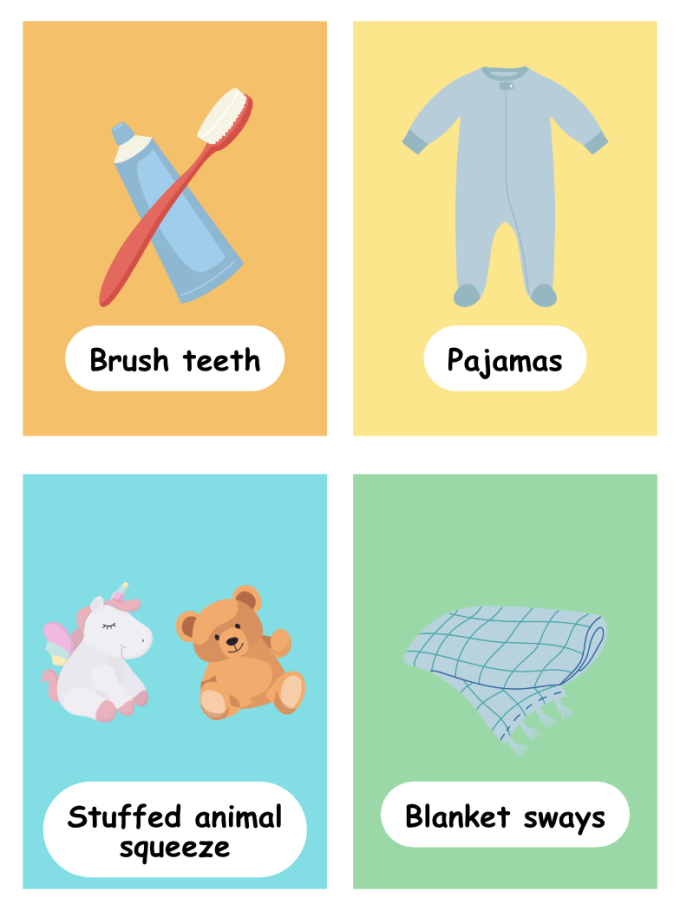
My son thrives on routines, but he also loves having a say in what he does. The cards allow us to keep a predictable structure while giving him choices, which makes him feel empowered. For nap time, our routine always starts with lunch, a potty break, and pajamas. Then, he gets to choose three cards: one for vestibular input, one for proprioceptive input, and one (or sometimes two) for calming activities.
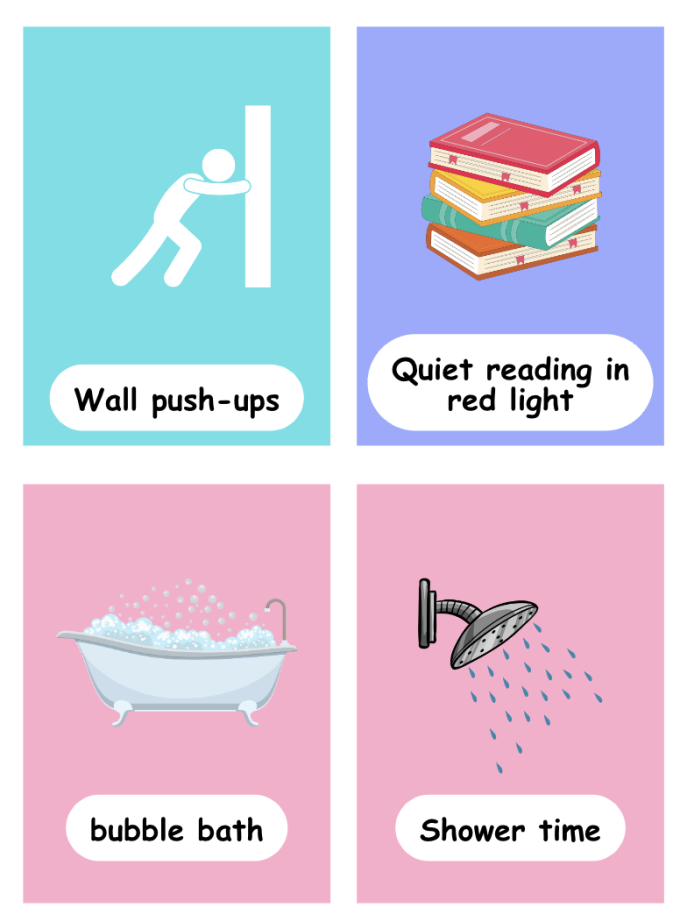
At bedtime, the routine starts with a bath or shower, brushing teeth, and pajamas. Then, he picks his cards. The activities meet his sensory needs, helping his body feel “just right” for sleep.
Understanding the Sensory Inputs
- Vestibular Input (Balance and Movement)
The vestibular system helps control balance and movement. For kids like my son, activities that involve spinning, swaying, or bouncing provide the sensory input they crave.Examples on the Cards:- Practice spins or sways: He loves twirling in circles or rocking side to side.
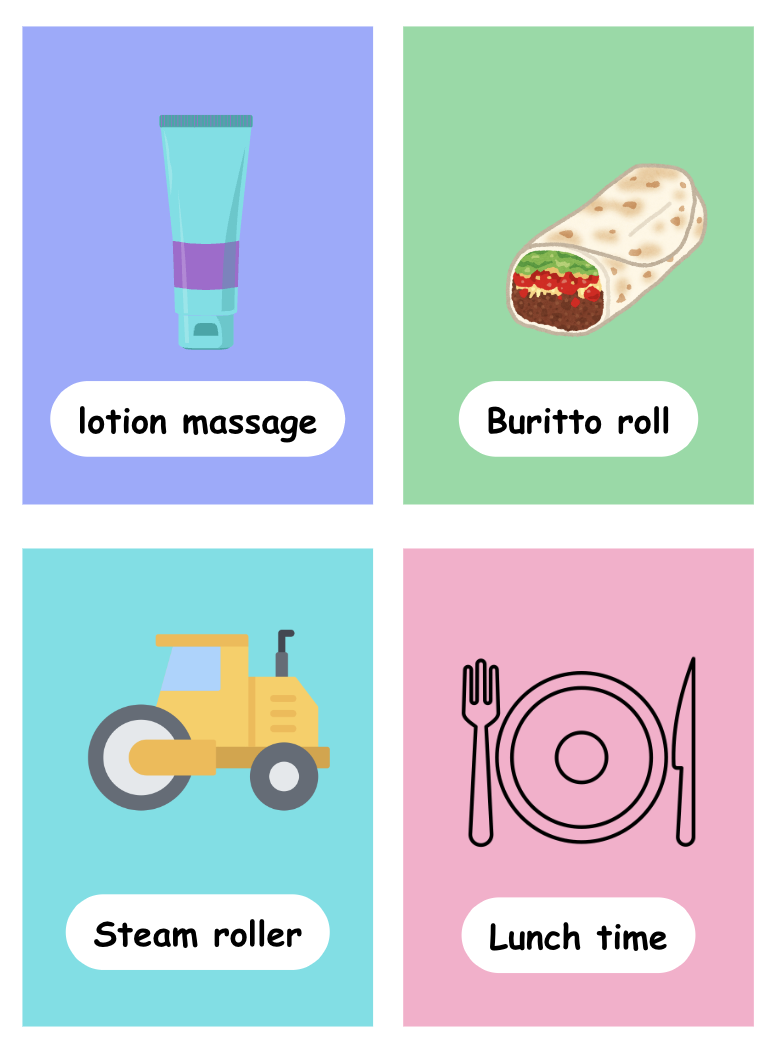
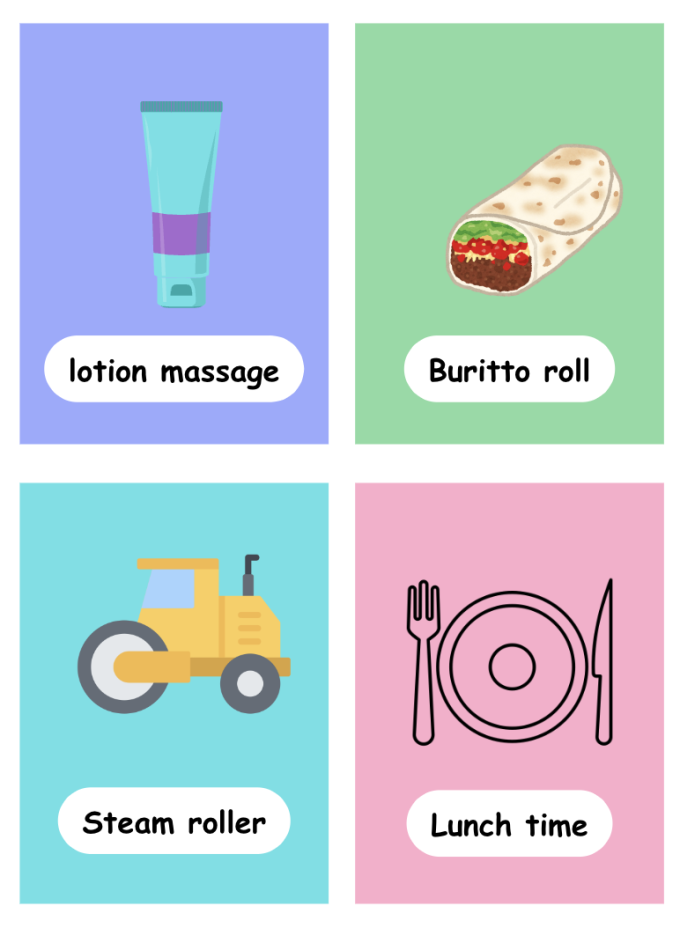
- Burrito Roll: I roll him up tightly in a blanket, then unroll him quickly by pulling the end of the blanket so he rolls out onto the mattress. He LOVES this.
- Proprioceptive Input (Body Awareness)
Proprioceptive activities involve heavy work or deep pressure that helps kids become more aware of their bodies. These are especially soothing for my son, as he loves crashing and squeezing.Examples on the Cards:- Pillow crash and squeeze: He dives into a pile of pillows, followed by a big bear hug.
- Steam roller: I roll a yoga ball across his back while he giggles with delight.
Proprioceptive input helps him feel grounded, reducing his need to climb or crash later.
- Calming Input
The final step in the routine is calming his body and mind. These activities help transition him to a restful state.Examples on the Cards:- Quiet reading in red light: The soft glow of a red nightlight makes story time extra relaxing. I cannot recommend a red light enough for quiet play and reading before naps and bedtime! We simply replaced his lamp bulb with a red one and only use that light during this time.
- Lotion massage: He gets a gentle massage with his favorite lavender lotion, which also incorporates calming scents.
Sometimes, if he seems especially wound up, I let him choose two calming cards. He loves choosing an essential oil for the diffuser and often picks another calming activity to go with it. I always use the diffuser in the living room where we play before naps and bedtime rather than in his room.
Putting It All Together
Here’s how a typical routine looks:
Nap Time Routine:
- Lunch → Potty → Pajamas → Spins or sways → Pillow crash and squeeze → Choose essential oil
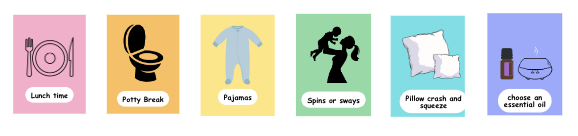
Bedtime Routine:
- Shower → Brush teeth → Pajamas → Blanket sways → Steam roller → Quiet reading in red light
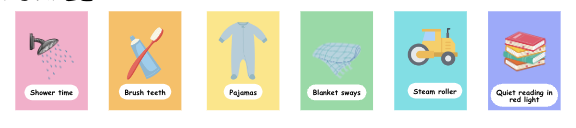
The choices keep him engaged, while the sensory activities provide what his body needs to settle down.
Tips for Starting Sensory Routine Cards
I recommend introducing the cards one at a time, choosing a different one from each category each night until your child has tried them all. This prevents them from feeling overwhelmed by too many choices at once. Once they’ve been introduced, you can offer all the options each night or stick with three for a while. When they seem to get bored, introduce a new activity!
Why It Works
Since introducing these cards, my son has gone from spending 30 minutes crashing in his crib to falling asleep in under 10 minutes. His body gets the input it craves in a healthy, directed way. Plus, we’ve turned what used to feel like a battle into quality time together.
The best part? These cards aren’t just for kids with sensory needs. They can work for any child who thrives on routine and benefits from sensory play. Whether your little one is a mighty mover like mine or simply needs help winding down, sensory routine cards might just become your new favorite parenting tool.
Ready to Try It?
Print the cards and start small. Observe what works best for your child and tweak the activities as needed. Trust me, the results are worth it!
Have you tried something similar? I’d love to hear your experience in the comments!
CLICK BELOW to get the cards!