

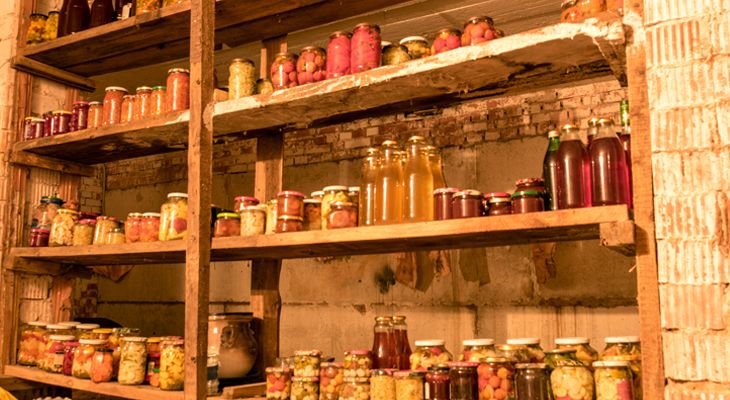
For years I made the practice to feed my family and friends for many months if the need arises. I do not suggest that you have to do the same, but I will say that a little in advance can make such a difference in how you face an emergency. Knowing the peace of mind that your family will come from the storm that is intact, cannot be surpassed.
Gardening
Do not forget the benefits of gardening as part of your food storage plan. Some locations are warm enough to grow vegetables all year round, but for most of us that is not the case. Yet we can do a lot to make our gardens productive for longer every season and to grow vegetables that are known to be like long keepers. Greenhouses and cold frames will extend the harvest season, and root cellars will keep vegetables far into the deep part of the winter. Do you not have a root cellar? There are ways to bypass that possible limitation with alternative storage options.
An unheated garage or basement Is great if it is a cool, dark and relatively moisture -free area. The most common root vegetables for storing the entire winter are winter pumpkin with hard skin, potatoes, sweet potatoes, carrots, onions, shallots, garlic, beets, turnips and rutabagas. Investigate carefully the vegetables that you intend to save. You don’t want stains to march the skin, because those are the places where contaminants can sneak in and spoil the vegetarian.
A DIY -The -Making Self Waste can “root cellar”: You can make a kind of carrot cellar with nothing more than a metal waste can, wooden curls and some sweat equity. Find an area with a bit of a slope if possible, so rain flows away from the top of the can when it is buried. Dig a hole a little wider than the waste can and only slightly shorter than the waste can go with the lid. Place the waste can in the hole and fill the ground around the sides of the can, the dirt up on the sides to only the lip at the top of the garbage can.
Fill the can with your vegetables, starting with a layer of wood prisoners and then a layer of vegetables. Continue to lay this way until you no longer have any vegetables or reach the top of the can, ending with a layer of timbering. Place the lid back on the can and make sure the lid is tight. Place some straw or hay over the lid in a thick layer. Place a piece of plywood or hard insulation on that; Hold it in place with a kind of weight (two or three large rocks will work).
Where you can store it all
A well -filled pantry that can deliver the needs of a family for the winter will take a serious space. Add the space needed to save drinking water and you can easily double the area you need. Perhaps you are lucky to have a large garage, basement, laundry room, under-utilized bedroom (such as a guest or craft room), or isolated barn, but many of us are not so happy. Yet there are ways to bypass a perceived lack of space. But where you store your food and other supplies, just make sure that they are well enclosed, with close -fitting lids, because you do not want to ‘share’ your food with unwanted insects and animals. Especially if you live in a damp climate or – like me – live where the winters are wet – it is a good idea to place a drying package in every container. I get mine online and the costs are minimal.
Squirrel canned goods, bags with flour, box mixes, and so on in plastic tubs with appropriate lids under your beds. If there is a limited space under a bed, long and shallow gift vouchers usually fit; Place your cans, boxes and bags in the bath, on their sides if necessary to still allow you to close the lid. Cabinets are another great area to store things: Gallon jugs of water can easily be stored along the side and rear walls without standing in the way. An empty drawer or cupboard shelf can house even more food, and you can hide a few items in rarely used equipment (think of large pots and canners). A storage bench on the front or back door or an ottoman with a top that opens also makes good places. If your corridor is wide enough, you can place sturdy, decorative cubbies or baskets along one edge. A bit here, a bit there, and suddenly you have built up a good stock. And don’t forget your walls! Adding a few sturdy shelves can contain even more food.
Do not wait for an emergency to use your stock of food and water. Use it! While using your food, buy replacements so that you never get up, and when you replace something, don’t forget to rotate your stores – first in equals first. That way you never have to worry about freshness.
***
Essentials for every emergency situation.
Winter Pantry of WinterThrough Georgia VarozzaHelps families to prepare for the What-IFS of daily life and experience the peace and confidence that is accompanied by a well-prepared pantry. Wherever you live and whatever the event is, chances are that you will experience a situation in which getting the food and delivery that your family needs is not immediately possible. This book contains various ways to prepare in advance by offering Big-Picture basics, an extensive list of food, medicines and health care articles, and tasty seasonal recipes that benefit from what you have stored at home.
Read more about the book and how you can buy here.