

Homeschooling has a reputation that no longer reflects reality. For many people, the word still conjures up a limited image: children isolated at home, parents trying to create a classroom in their living room, and families opting for an extreme alternative to ‘normal’ education.
But that picture doesn’t reflect what homeschooling will look like for families in 2026. Modern homeschooling is diverse, flexible, resource-rich, and designed around the way children actually learn. That’s why homeschooling not only needs better explanation…
A rebranding is needed.
Because some persistent myths stand in the way of families realizing that homeschooling is not only a credible option, but a transformative one.
Myth 1: Homeschooling is just homeschooling
One of the most common misconceptions is that homeschooling means simulating a traditional classroom at home.
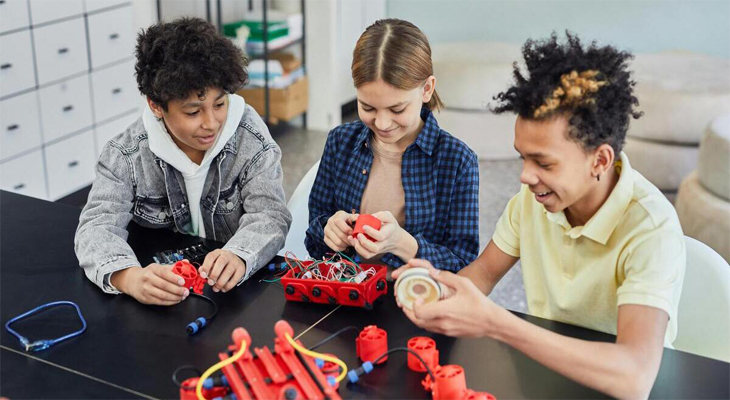
In reality, homeschooling families are working hard to completely break away from the model of institutional education. Homeschooling is built around integration rather than replication. Learning happens through reading, conversations, projects, hands-on work, experiences, online courses, community classes and hands-on applications.
The goal is not to recreate the school. The goal is to educate. And homeschoolers draw a clear line to distinguish the two.
Myth 2: What families saw during COVID is what homeschooling is
Many parents’ only exposure to “learning from home” came during the pandemic, when children were expected to complete their school assignments online.
That experience was not homeschooling.
That was remote emergency instruction.
Homeschooling is deliberately designed. Parents choose materials, pace, structure and approach. It is flexible, responsive and built around the child rather than institutional schedules. And social connections and time spent outdoors are not side-notes; they are a central part of how many homeschooling families live and learn.
Combining this with emergency remote instruction has created unnecessary fear.
Myth 3: Parents need to be experts in homeschooling
Many parents assume that homeschooling is only possible if they personally know how to teach each subject.
But modern homeschooling operates within a vast ecosystem of curriculum providers, online programs, teachers, hybrid schools, co-ops and community classrooms.
Parents are not expected to be experts in everything. They serve as guides: they observe, select tools and adjust if something is not working.
Homeschooling is less about having all the answers and more about knowing how to find them.
Myth 4: Homeschooled children are isolated
Another persistent myth is that homeschoolers lack social opportunities.
In reality, many homeschooled children spend a lot of time in group settings: sports, theater, church, co-ops, enrichment classes, volunteer work, and neighborhood friendships.
Social development is not about sitting in a room all day with peers of the same age.
It’s about learning to communicate, collaborate and build relationships. And in 2026? The available options are stretched out.
Myth 5: Homeschooling is only for certain “types” of families
Homeschooling is often portrayed as niche or extreme.
But families from a wide range of backgrounds choose to homeschool for many reasons: academic needs, mental health, flexibility, travel, faith, values, learning differences, or simply a desire for a change of pace of life.
There is no single homeschool personality, no single method, and no single right way.
A better way to think about homeschooling
At its core, homeschooling, often better described as homeschooling, is not defined by location. It is defined by ownership. They are parents who choose to stay close to their children’s learning, to adapt when something isn’t working, to prioritize understanding over haste, and to recognize that growth does not happen the same way for every child.
And that’s why homeschooling will never look the same from one family to the next. It can be structured or fluid, academic or interest-driven, traditional or innovative. It evolves. It adapts. It reflects the child and the home.
So the real issue may not be whether homeschooling “works.”
Perhaps the problem is that we’re still using language shaped by stereotypes, outdated assumptions, and pandemic confusion to describe something much more thoughtful and dynamic.
Homeschooling doesn’t need to be defended.
It needs to be redefined.
And perhaps the better question isn’t, “Should we rename homeschooling?”
Maybe it’s this: How would the conversation change if we did?
***
The only book you need for homeschooling
The Homeschool BibleThrough Mandy Daviscontains decades of experience, summarized in practical wisdom. Legal action. Curriculum overviews. Daily rhythms. Real answers. But there’s something else in there too – something every homeschooling parent needs and rarely encounters: permission.
Whether it’s permission to do things differently, to trust your instincts, or to stop performing for systems that weren’t designed with your children in mind, this book focuses you on what matters most and frees you from everything that doesn’t.
Learn more about the book and how to buy it here.