

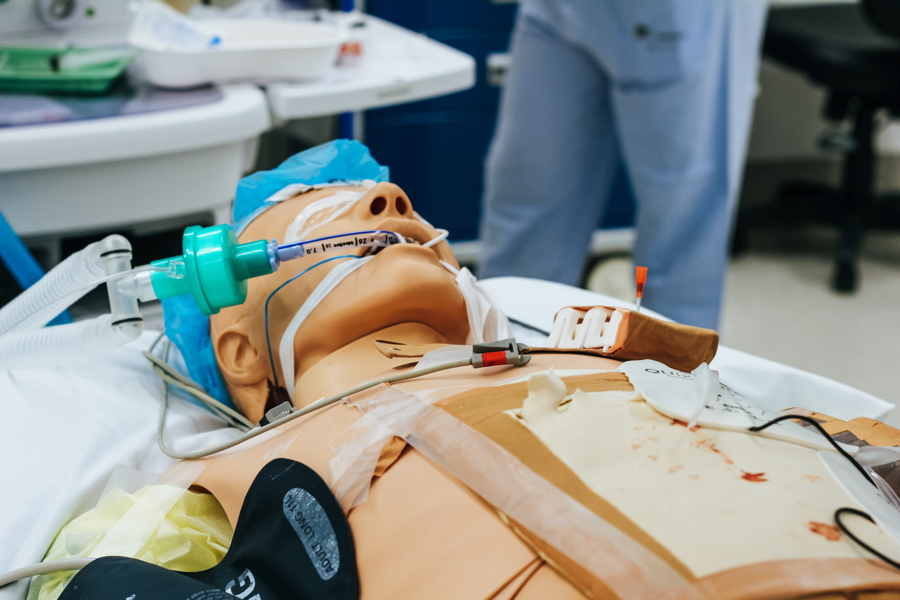
Simulation is of enormous importance in nursing education because it serves as a bridge between theoretical knowledge and real-world healthcare scenarios. For example, high-fidelity simulators are used to create realistic patient care environments, allowing nursing students to apply their knowledge and skills in a simulated clinical environment. This practical experience not only improves their clinical skills, but also promotes the development of critical thinking and decision-making skills, which are essential for their future role as nurses.
Additionally, using simulation for clinical skills training in nursing education offers several benefits. For example, it provides students with a safe and controlled environment in which they can practice various nursing procedures, from basic patient care to complex emergency interventions. This kind experiential learning helps students gain confidence and competence in their skills, ultimately preparing them for the challenges they will face in real clinical environments.
Additionally, the inclusion of patient simulators or standardized patients in nursing education allows students to interact with simulated scenarios that closely resemble real patient encounters. This type of simulation not only improves students’ technical skills, but also emphasizes the importance of effective communication, empathy and interdisciplinary teamwork, all of which are essential to providing holistic patient care. Therefore, the integration of different types of simulations into nursing education is of great importance in developing well-rounded and competent nurses.