

The field of fertility treatment is a very unique one in which it is not taught in most curriculums for nursing school.
It is a niche specialty, so I am sure you have a lot of questions about what an IVF nurse is like!
I have been an IVF nurse since 2021. I have previously worked as a work and delivery nurse, so I am familiar with women’s health.
However, infertility is a specific area in which I didn’t know many terms and pathophysiology when I first started.
The role of an IVF nurse is an extremely valuable in the sense that they coordinate the entire treatment course of a patient and serve as their most important support throughout their time.
An infertility trip can be 2 months to several years.
The emotional reward that an IVF nurse gets when she tells her patient that she is pregnant is more than fulfilling. Unfortunately, many patients do not become pregnant on the other side of the currency.
When your patient has a bad result after you have invested your heart in her care, it can feel as if you are losing part of yourself.
Although there are challenges to be an IVF nurse, there are many more rewards and it is a wonderful specialty to work in.
I. Become an IVF nurse
The way to become an IVF nurse consists of a schedule and frankly … some luck. Having a health background for women to work as an IVF nurse is not required, but it will certainly increase your chances!
The great thing about nurse is that you can work in any specialty without extra training. It’s all about the roads you take, the people you know and your interview skills.
It is common for many IVF nurses to have been former labor and delivery nurses. It is the standard process when you want to leave beds in front of the bed, but remains within the health of women or reproductive health.
There are no extra certifications or courses that are needed to become an IVF nurse.
Ii. The role and responsibilities of the IVF nurse
Although the most important role of an IVF nurse is to coordinate a patient’s treatment plan in addition to the doctor’s orders, she is also responsible for consistent education and follow-up.
Coordinating the “Cyclus Plan” of a patient starts to inform the patient about all the requirements that must be met to start treatment.
These requirements consist of general labwork, signed permissions and specific tests for that patient to ensure that an optimal treatment cycle can be performed.
Every month is not exactly the same in the menstrual cycle of a woman with regard to the number of eggs or uterus lining thickness.
Patients are often monitored while they are being treated, so the IVF nurse is responsible for communicating plan updates and the next steps after each visit.
Here is a basic list of all tasks for which an IVF nurse is responsible for:
- Help with scans
- Perform patient reviews
- Training patients about a treatment plan
- Training patients about medication administration
- Helping with embryotransfers
- Helping with Echos
- Menopausal women learn about symptoms and treatment options
- Take patients to inform them about test results
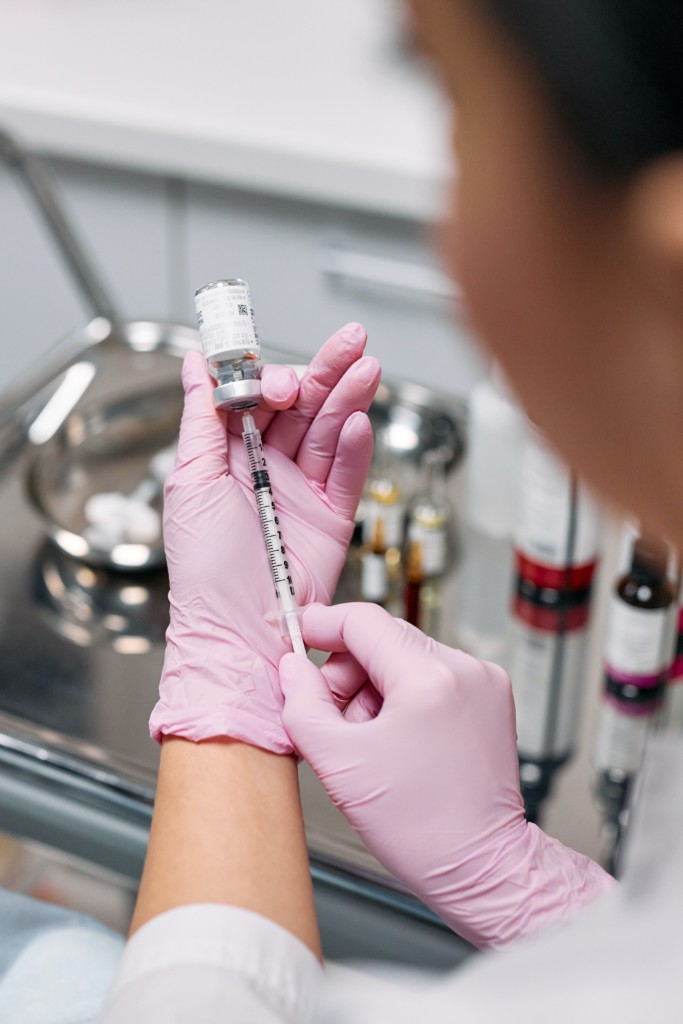
And of course a considerable part of the IVF treatment is the injections. Patients are expected to carry out the injections themselves at home, so the IVF nurse offers thorough and clear training to ensure that the patient feels confident and comfortable.
The IVF nurse is also in close cooperation and frequent communication with the provider.
It is across the board for nurses to have strong communication skills to ensure that orders are followed correctly and there is a low chance of medical errors.
IVF Nursing Salary
The Salary for an IVF nurse Is usually slightly less than a hospital salary, but many places offer a fairly comparable amount. Every state is so different in how much they pay, so the range really goes from $ 60k $ 110k.
If you are more experienced or in a senior/leading role, this will be higher.
III. A day in life
A typical morning for an IVF nurse should start checking voicemails and e -mails that she received after hours.
Time management And organization His two skills that are absolute must for an IVF nurse.
Insight into what a priority is and ensuring that non-urgent matters are not missed is a daily requirement.
Patients also often come in during the morning hours for monitoring, which is when the provider will perform an ultrasound to assess the ovaries and uterus, and to do blood work to check their hormone levels.
These two pieces tell the provider the current status of the ovary reserve of a patient, or in simpler terms, the number of eggs she has at that time.
Medications and collecting eggs
As mentioned earlier, the IVF nurse is the most important instructor of medicines.
Almost every patient has never held a syringe, so you can imagine how afraid and anxious they are to inject a needle on their own!
Their most important question is “IVF hurts?”
Patients must inject themselves for 9-12 days in a row. Yikes.
Of course no injection feels good, so it is absolutely not a painless journey. However, it is fast, the needles are relatively small and it is 2-3 a day, all at the same time.
I am a nurse- but it just suggests that you are in their shoes, gives me the tingling. It can really be that scary.
That is why it is so essential for the IVF nurse to be a strong educator.
Apart from learning patients how they can inject themselves, the nurse also teaches them about common concerns, side effects and emotional management.
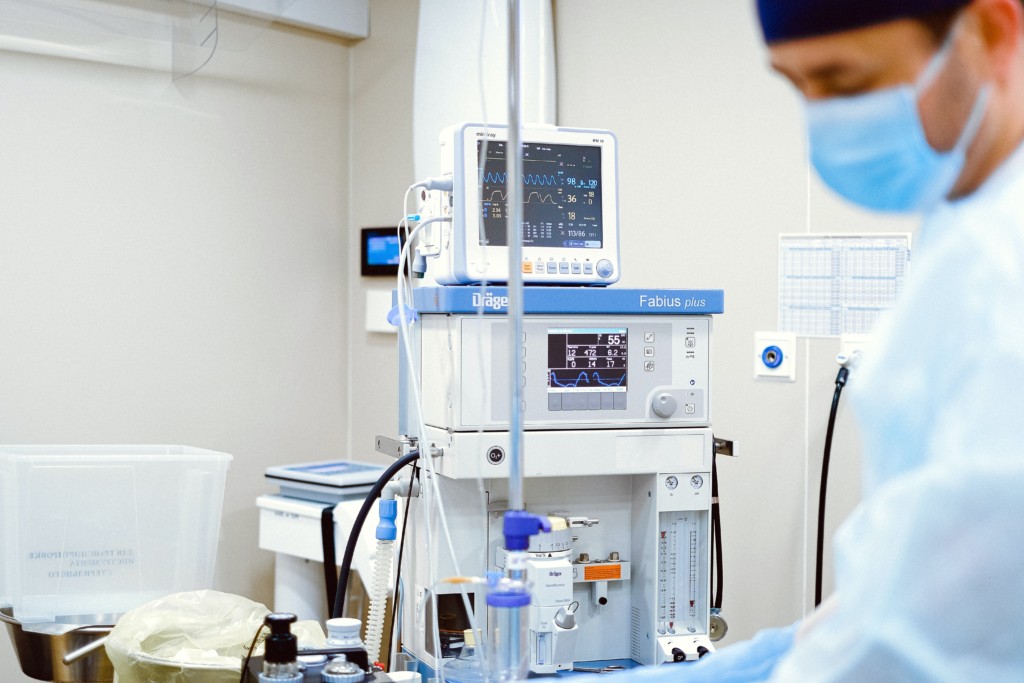
The grand finale is to pick up eggs, where the provider collectes all the eggs that the patient grew during her treatment cycle. This is one or procedure under deep sedation.
Depending on the clinic and the company, the IVF nurse can also be the OR/Pacu nurse. It all depends on the size and patient volume of the specific clinic.
V. fertilization and embryotransfer: emotional moments

After collecting eggs, the eggs are fertilized to become embryos.
Not all make it, so the nurse can also update the patient on the progress of the eggs/embryos.
These conversations can be quite emotional if they had poor results.
As soon as a patient has a healthy embryo and prepares for an embryo transfer (who also coordinates the IVF nurse), the embryotransfer will occur.
The IVF nurse helps the provider during this simple (but monumental) procedure.
In my clinic, the IVF nurse helps to lead the abdominal ultrasound during the embryotransfer.
Celebrate

To be honest, an IVF nurse can be very nice if you decide to be your complete self!
You have many options to express your personality and style of nurse as an IVF nurse.
You have frequent conversations with your patients, from phone calls to e-mails to personal. You can form really good relationships with your patients.
It is always nice to celebrate victories with them. I myself have “woohoo” and “yaaay!” On the phone to my patients, and stitched and choked while they took the time to cry tears of happiness.
I always start thinking again … The phone call from an IVF nurse during her normal working day can be 1 minute that completely changes the patient’s life.
That is so powerful.
Pursue a career as an IVF nurse: practical tips
If you want to pursue a career as an IVF nurse, I have a few tips that really help you to land the role.
- Use your women’s health experienceIf applicable, during your applications and interviews. IVF nurses (like myself!) Knowing that there is not really another field that is just as closely related to reproductive medicine such as labor and delivery or gynecology.
- Mark Skills in time management and organization. Do you remember when I said they are crucial in the role of an IVF nurse?
- Emphasize that you are one good listener and that empathy is a natural gift. Many nurses miss the right empathy skills and how they can communicate, so make sure you clarify that you are not like that!
- Search guidance of mentors! Whether that is your colleague, a friend who went through IVF, or useful online sources.
- E-mail IVF clinics Even if you don’t see a vacancy. You never know if the right eyes will see it at the right time and arouse an interest to get to know you.
- Network on LinkedIn. Search near IVF clinics, make contact with the recruitment manager or nurse manager and send a fascinating message! You can search for IVF nurse or IVF nurse manager under the “My Network” category and limit them to your location to find employees who work in nearby IVF clinics!
Conclusion
I hope this message sheds light on what it is like to be an IVF nurse, as well as How To become one yourself.
One of the ways to be a healthier, happier nurse is Find the right career for you.
If IVF Nursing was ever interested of you, you now have the right knowledge and insight to help you make a decision!
As an IVF nurse you have the opportunity to have a significant impact on the lives of hopeful parents, bringing joy and fulfilling families looking for the miracle of parenthood.